Ignorance: An Escape Plan
(This framework borrows, and builds from, the concept of ‘Unknown Unknowns’ . )
Situation: There is something you don’t know.
Don’t be embarrassed. Ignorance is natural and nothing to be ashamed of. We are all ignorant of almost everything all the time. In a way, this is good, because there are a lot of things, and our brains have finite RAM. You can even make a rational choice to remain ignorant of something, either in the ‘it’s probably not worth my while to learn whittling’ sense, or in the ‘that’s definitely none of my business’ sense.
But in this instance, you are ignorant of something that you need to know, and so we’re going to fix that.
You need an escape plan.
But first, we need to know what level of ignorance you are trying to escape from.
The Levels
Level One Ignorance - I Have Questions
Example: You are buying a secondhand car. You’ve bought a secondhand car before, so you know what questions to ask the dealer.
Level Two Ignorance - I Don’t Know What Questions To Ask
Example: You haven’t bought a secondhand car before. You realise that you don’t know the right questions, so you seek help from someone who has. They let you know what questions you should be asking. (Or else you Google it and find a reliable source).
Level Three Ignorance- This Is Fine
Example: You have bought a secondhand car before. You’ve also bought a secondhand van, and a secondhand motorbike. You are justifiably confident about your second-hand vehicle purchasing abilities. This time you’re buying a secondhand motorboat.
Level Four Ignorance - I Told You This Is Fine, Leave Me Alone
Example: You have bought a secondhand car before. You’ve also bought a secondhand van, and a secondhand motorbike. You are justifiably confident about your secondhand vehicle purchasing abilities. This time you’re buying a secondhand motorboat. A friend of yours points out that boats might be somewhat different and maybe you should do more research.
You brush them off.
(Spoiler: boats are somewhat different. No amount of experience in buying land-based motor vehicles will teach you the importance of hiring a qualified marine surveyor to check for osmotic blistering below the waterline.)
The Escape Plans
Escape Plan for Level One: You Can Take It from Here
If you’re at Level One, then honestly you’re able to deal with the situation yourself. Of course, there is still the non-trivial matter of how difficult it is to find the answers to your questions, and that might take a lot of work. But you know what direction you need to work in, so compared to the other levels, you are practically done already. Good luck.
Escape Plan for Level Two: Reach Out to Other People
If you’re at Level Two, then you need help to figure out the right questions. However, fortunately, you recognise that you need help. So provided you have access to people with experience in the relevant area (or to suitable resources), you are able to deal with the situation by reaching out to those people (or by referring to those resources).
Escape Plan for Level Three: Have Other People Ready To Reach Out to You
If you’re at Level Three, then you cannot deal with the situation yourself. You aren’t going to seek help because you don’t realise that you need it. You’re overfitting from your previous experiences to your current situation, and you think that everything is fine. You are only going to figure out that it isn’t when either (a) someone is kind enough to step up and correct you or (b) you learn the hard way (e.g., by purchasing a lemon of a motorboat). What you can do is to take the following precautionary measures in advance:
minimise the risk of being in this scenario in the first place by being as mindful of potential overfitting as possible, and
surround yourself with people who are able and willing to reach out to you if they spot that you have fallen into this error.
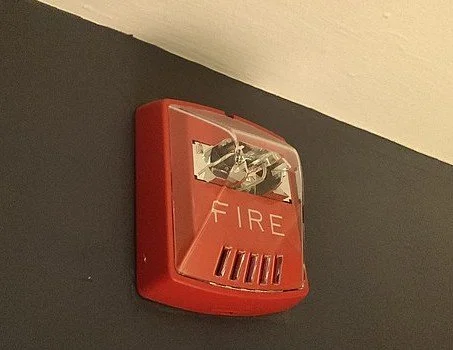
Those people are now your fire alarm.
Notice: from the inside, Level Three feels like Level One, because in both cases, you think you know what you’re doing. So the only way you know that you’re at Level One rather than Level Three is that the fire alarm isn’t going off. Make sure you have a working fire alarm.
Escape Plan for Level Four: Just Don’t Be That Guy, Seriously
If you’re at Level Four, then you cannot deal with the situation yourself, and no one else can deal with the situation either. This is not to say that everyone who suggests you are overfitting is automatically correct. Your previous experiences might be a closer fit to your new situation than they realise. Think of this as ‘burnt toast’ in the fire alarm metaphor: they’ve seen a warning sign and they’ve drawn your attention to it. This is good. It means your alarm is working. So pushing back as part of a discussion can be entirely reasonable - you’re just pointing at the toast. But if you aren’t engaging with the criticism at all, then you’ve just ignored your fire alarm without knowing why it went off.
Also, you’re a nightmare. Stop it.
Summary of advice:
For individuals:
You already know that you should ask questions when you don’t know something: make sure this includes asking what questions you should be asking. “I’m new to this area, I’m used to area X, what are my blind spots likely to be?”
Build a network of people you can reach out to, and ensure that the network is diverse enough that you have go-to people in a lot of different areas which connect with your core work in various ways but which are not the same. (If you are operating within an organization, they should be making this as straightforward as possible.)
Recognise how easy it is to overfit new scenarios to previous experiences and try to be mindful of situations where you are at risk of doing so. This is an imperfect tool, but it is worth having it in your kit.
As far as possible, try to build a network of people who are willing and able to reach out to you if you do make that kind of mistake. But realise that if you are operating within an organisation, building that kind of network is primarily the organisation’s responsibility - they have more power here than you do. Your responsibilities are:
the standard ‘Golden Rule’ approach of being a proactively supportive colleague yourself,
not being That Guy.
Don’t be That Guy.
(It’s worth saying twice).
For organisations:
Encourage people to ask questions when they don’t know something.
Then immediately realise that this isn’t nearly enough, and that much of the responsibility for building a functional escape plan lands on you. In particular...
...your employees will massively benefit from your active assistance in building the ‘network to reach out to’, especially when they are new to the organisation, and
...building the ‘network which will reach out to them’ is pretty much entirely your responsibility. It requires that their work is visible to others, including others outside of their primary area of expertise, and that there is sufficient casual interaction within this extended network that these issues are caught early. Also, developing well-considered, well-presented critical feedback (i.e., the kind that will actually be listened to) is hard work in its own right. It’s not sufficient to ensure psychological safety for people who volunteer such feedback. There have to be actual motivations and rewards for them to do so. You have to build them.
Try not to hire That Guy.
And if you want to talk about how any of this looks in practice for your organisation: please get in touch at lisa@lisamcnulty.co.uk